

Beyond the Bouquet: Simple, Unique, and Green Floral Arrangement Ideas for Every Occasion
Why Floral Arrangement Ideas Matter for Creating Unforgettable Moments
Floral arrangement ideas can transform any space and occasion, but the key is knowing where to start. Whether you're designing a centerpiece for your dining table, welcoming guests with an entryway display, or preparing flowers for a special celebration, understanding a few fundamental principles will help you create arrangements that look professionally crafted.
Quick Answer: Top Floral Arrangement Ideas
- Follow the "Foliage, Focal, Filler" formula - Layer greenery first, add showstopping blooms second, then fill gaps with smaller flowers
- Use creative containers - Try vintage teacups, silver teapots, wicker baskets, or seasonal vessels like pumpkins
- Accept simplicity - Many professional designers achieve neat results using just two or three flower types
- Prepare stems properly - Cut at an angle, remove lower leaves, and slit woody stems for better water absorption
- Add texture with greenery - Incorporate eucalyptus, ferns, or foraged branches to create depth
- Choose the right vase - Narrow openings work best for beginners; match vase height to your display location
- Apply Ikebana principles - Focus on form, line, and structure for minimalist impact
- Transform grocery store flowers - Separate stems by type, vary heights, and add greenery for a professional look
You don't need a flower shop full of blooms to create something stunning. Many of the most popular designers accomplish an neat look with only two or three materials. The secret isn't in having endless variety—it's in understanding how to work with what you have.
This guide will walk you through proven techniques that florists use every day, from selecting the right mechanics to hold your stems in place, to choosing containers that improve your design. You'll learn how to prepare your flowers for maximum longevity and how to layer different elements for professional-looking results.
Whether you're arranging flowers from your garden, working with supermarket bouquets, or planning something special for an event, these practical ideas will help you create arrangements that reflect your personal style and make a lasting impression.
The Essential Formula for Stunning Floral Arrangement Ideas
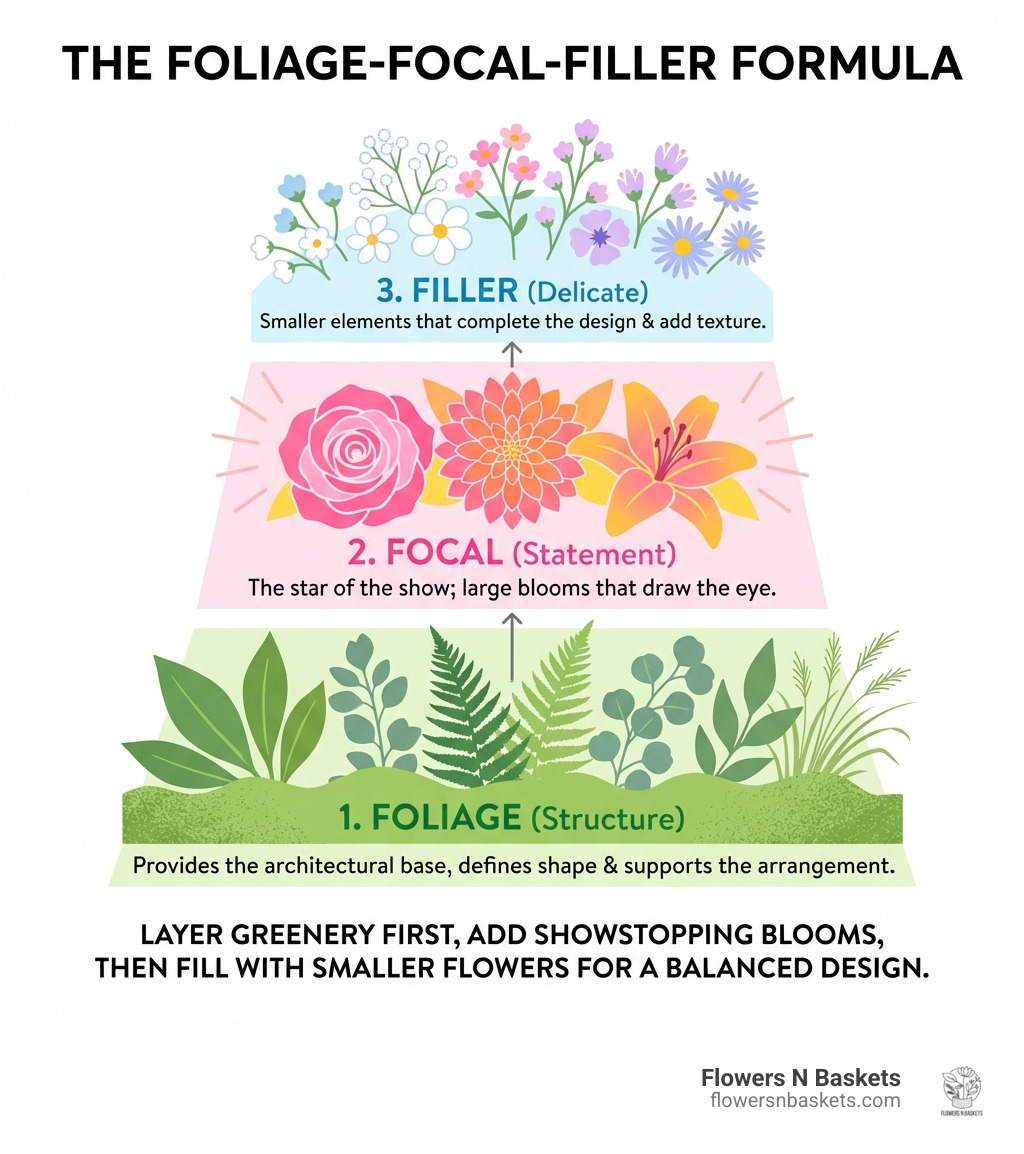
Creating a breathtaking floral arrangement doesn't have to be a mystery. In fact, there's a foolproof formula that many professional florists, including our custom designers at Flowers N Baskets in Palm Harbor, follow to achieve balanced and beautiful results. This "Foliage, Focal, Filler" method provides a clear order of operations that ensures every stem contributes to a cohesive design, no matter its size or complexity.
The first step in this foundational formula is to establish your base with foliage. Think of greenery as the architectural blueprint for your arrangement. By placing foliage first, you're not just adding green; you're actively defining the overall shape and form. This initial layer creates a supportive "nest" within your chosen vessel, providing structure for the flowers that will follow. We recommend using two to three different types of greenery, varying textures and shades to build an interesting and dynamic base. For example, long wispy grasses can add height and movement, while big shiny leaves provide a lush, foundational texture. This strategic use of greenery from the outset ensures your arrangement has depth and a natural, organic feel, preventing it from looking sparse or unbalanced.
Once your green foundation is in place, it’s time for the stars of the show: your focal flowers. These are the largest, most eye-catching blooms that truly define the season and mood of your arrangement. Whether it's a dramatic peony, a vibrant sunflower, or an neat rose, the focal flowers draw the eye and set the tone. As a general rule, we often stick to one to two types of focal flowers in our designs. When arranging them, a little trick we use is to opt for an odd number of blooms. This simple practice gives your bouquet a more natural and less symmetrical, stiff appearance. Place these magnificent blooms strategically within your greenery framework, allowing them to shine while still feeling integrated into the overall design.
Finally, we introduce the filler flowers. These are the supporting characters that complete the picture, filling in any gaps and adding intricate details. Filler flowers, often smaller and more delicate than focal blooms, serve multiple purposes. They can add a touch of whimsy, improve the color palette, and provide crucial texture. Examples like solidago, baby's breath, delphinium, or snapdragons are excellent choices. They also play a practical role, helping to conceal any exposed mechanics (which we'll discuss later) and ensuring a full, lush appearance. By observing your arrangement from all angles, you can strategically place these tiny, multi-headed blooming or budded stems to create a harmonious and impressive display.
This formula is a guide, not a rigid rule. It's about building your arrangement thoughtfully, layer by layer. No matter what type of blooms and greenery you're working with, this "Foliage, Focal, Filler" approach ensures a structured, beautiful, and impressive result every time. For those moments when you need a stunning arrangement delivered promptly in Palm Harbor, we're here to help; we even offer More info about same-day floral delivery in Palm Harbor for your convenience.
Creative Containers: Thinking Beyond the Standard Vase
The vessel you choose for your floral arrangement ideas can be just as impactful as the blooms themselves, influencing the entire style and mood of your display. While traditional glass vases are always a classic choice, thinking outside the box with creative containers can lift your arrangements from beautiful to truly unforgettable. We love finding unique ways to present our custom floral creations, and you can too!
Imagine changing everyday items into charming and distinctive homes for your flowers. For instance, a gleaming silver teapot can add a touch of vintage elegance and whimsy to any setting. Whether it's a family heirloom or a charming find from a local antique shop in Dunedin or Tarpon Springs, a silver teapot instantly infuses character. To create such an arrangement, you'd simply cut wet floral foam to fit snugly into the opening, pick two tones of roses plus delphinium, and arrange them with joy. If you’re curious about the process, you can find a Step-by-step silver teapot arrangement guide.
Seasonal containers also offer a fantastic opportunity to tie your floral displays into the time of year. During autumn, a hollowed-out pumpkin can become a festive and eye-catching vase for a fall-themed bouquet of eucalyptus and mums. For spring, an aged concrete planter might hold a fresh gathering of green trick dianthus, tulips, and pussy willow tips. These natural, unconventional containers add a unique charm that store-bought vases often can't replicate.
Wicker or woven baskets are another excellent option for a rustic or garden-inspired look. The trick here is to hide a vase inside the basket, then fill it with garden roses, peonies, and draping greens like mint or scavenged ivy. This creates a soft, organic aesthetic that feels effortlessly chic.
Don't overlook the potential of smaller, more delicate items either. Vintage teacups, for instance, are perfect for showcasing a single delicate bloom or a small cluster of sweet peas and lisianthus. They bring an intimate, charming touch to a bedside table or a quiet corner. Similarly, bud vases, whether ceramic or metallic, can be grouped together to create a delightful display. For rounder shapes, rest flower heads closer to the rim and tuck tropical leaves around roses with accents like snapdragon and fern.
Even glass cloches, typically used for decorative displays, can house potted succulents or air plants, creating miniature, self-contained botanical worlds. Wrapping mosses and lichen around potted succulents beneath a cloche, perhaps on wooden trivets, adds an enchanting touch.
The key is to consider the best vase shapes for each type of arrangement and how the container can improve the flowers. A taller vase might be ideal for a grand entryway display, while a shorter, wider bowl works wonderfully for a dining table centerpiece, allowing conversation to flow easily. By experimenting with different containers, you can open up endless floral arrangement ideas that truly reflect your personal style and the spirit of any occasion, from simple gatherings to grand celebrations in Tampa Bay. For festive holiday displays, don't forget to explore Unique Thanksgiving centerpiece ideas that often incorporate creative vessels.
Elevating Simple Ingredients with Greenery and Texture
Sometimes, the most neat floral arrangement ideas are those that accept simplicity, allowing a few select elements to truly shine. We’ve found that many popular designers achieve an incredibly refined look with just two or three materials, proving that floral beauty doesn't need to be complicated. The secret often lies in how we lift these simple ingredients, particularly through the clever use of greenery and texture.
Greenery is far more than just a background element; it's a vital component that adds depth, structure, and a lush quality to any arrangement. We love to use a mix of two or more types of foliage to create an interesting base. Think about incorporating eucalyptus, with its soft, silvery-green leaves and aromatic scent, alongside the rich, deep greens of ferns or the architectural lines of foraged branches. This combination of varied textures and forms immediately makes an arrangement feel more sophisticated and thoughtfully designed. For example, extending greens like fern and eucalyptus at least six inches beyond the vase creates a wonderfully full and flowing silhouette.
Beyond just the choice of greenery, the way you use it creates texture. Consider a monochromatic palette, focusing on different shades and textures of green itself. A "green on green" arrangement can be incredibly striking, using various types of foliage to create visual interest without relying on blooms. This approach highlights the inherent beauty of plant forms and offers a serene, natural aesthetic.
Even with minimal ingredients, you can achieve a "wow" factor by paying attention to proportion and placement. Imagine a simple arrangement of slender stems of ginestra and lily-like fritillaria, as showcased by designer Mimi Brown—the striking simplicity comes from the intentional use of each element. Similarly, a single variety of tulips, when expertly arranged, can make a significant visual impact, especially if you gently open and reflex the flowers to dramatically change their look.
Foraged elements like branches, vines, or even roadside forsythia can become the backbone of an arrangement, adding dramatic height and an organic, wild touch. These natural materials are fantastic for filling a room with flowers, with their arching forms creating drama through placement. We can also weave vines around decorative elements or allow them to flow freely, adding dynamic movement to the design.
Whether you're working with a few choice blooms or a bounty of garden clippings, the strategic incorporation of varied greenery and attention to texture can transform simple ingredients into extraordinary floral arrangement ideas. It's about seeing the potential in every leaf and stem to contribute to a cohesive and captivating display. For arrangements that bring clean air and beauty into your home, consider our local delivery options for More info about Peace Lily delivery in Palm Harbor.
Professional Stem Preparation and Mechanics
The longevity and structural integrity of your floral arrangements depend heavily on proper stem preparation and the clever use of floral mechanics. These are the unsung heroes behind every professional-looking bouquet, ensuring your flowers stay hydrated and perfectly positioned.
First, let's talk about preparing your flower stems. This is a crucial step that directly impacts how long your beautiful blooms will last. Always cut stems at an angle, ideally underwater if possible, to maximize the available surface area for water absorption. A sharp knife or floral shears are essential for a clean cut, preventing the stem's capillaries from crushing and hindering water uptake. For any leaves that would fall below the waterline in your vase, remove them. This simple act prevents bacterial growth in the water, which can quickly shorten the life of your flowers. For woody stems, like those of hydrangeas or some branches, an extra step is beneficial: cut a vertical slit about an inch or two into the bottom end. This further increases the surface area for water absorption, allowing these thirsty stems to drink more effectively. These best practices are vital for any arrangement, from a simple centerpiece to the most elaborate wedding decor in Tampa Bay. For more insights on caring for your blooms, refer to resources like Seasonal Flower Arranging techniques.
Next, we dive into mechanics—the tools that provide structure and support within your chosen vessel. These tools are invaluable for holding blooms in place, especially when you desire an airy arrangement with less material or when working with difficult-to-position stems.
- Floral Tape: Clear or green floral tape is incredibly versatile. One popular technique is to create a grid pattern across the opening of your vase. This grid acts as a scaffold, allowing you to insert stems precisely and hold them at various angles, giving your arrangement shape and stability.
- Chicken Wire: For larger arrangements or wider containers, crumpled chicken wire can be placed inside the vase. It provides a sturdy, reusable, and eco-friendly framework that stems can be threaded through, offering excellent support and flexibility.
- Flower Frogs (Kenzans): These are weighted bases with sharp pins, traditionally used in Ikebana. Placed at the bottom of a shallow container, a flower frog allows you to anchor individual stems upright, creating precise and minimalist designs. They're fantastic for arrangements where you want to highlight the unique line and form of each flower.
- Floral Foam: While we prioritize sustainable practices, wet floral foam can be useful for certain designs, particularly those needing a dense, compact shape or for shallow containers. When using foam, ensure it is fully saturated with water before inserting stems. It provides excellent stability and hydration.
By mastering these fundamental techniques of stem preparation and utilizing appropriate mechanics, you gain control over your arrangement's design and ensure your flowers remain fresh and vibrant for as long as possible. These professional tricks are simple to learn and will transform your approach to floral arrangement ideas.
Frequently Asked Questions
What are the best minimalist floral arrangement ideas?
Minimalist floral arrangement ideas focus on the "less is more" principle, creating significant impact with a limited number of materials. We often find that the most neat designs are achieved with just two or three types of flowers, or even a single striking element. This approach emphasizes the natural beauty, form, and texture of each bloom.
One of our favorite minimalist ideas is the "single flower arrangement." Imagine a single, perfect peach garden rose in a slim, earthen vase, or a trio of neat calla lilies. The simplicity allows the flower's unique characteristics to truly stand out.
Another effective technique involves using only two or three types of materials. For example, designer Mimi Brown created a striking arrangement with just slender stems of ginestra and lily-like fritillaria. The right proportions make all the difference, much like in cooking! Similarly, Brooklyn-based designer Ingrid Carozzi crafted a beautiful pink effusion with only ranunculus and sweet peas. You don't need an endless variety of flowers to create a gorgeous and interesting arrangement.
Consider the power of just one ingredient. Ariella Chezar demonstrated this beautifully with an entire display consisting of just four clematis vines. The red of the 'Madame Julia Correvon' variety made a strong statement. Even a single variety of tulips, when arranged thoughtfully, can create a "wow" moment, especially if you open and reflex the petals for added drama.
Bud vases are perfect for minimalist displays. They can be made of ceramics or metallics and are ideal for showcasing single stems or small groupings. For rounder bud vase shapes, simply rest the flower heads closer to the rim, perhaps tucking a tropical leaf or a sprig of fern for subtle contrast. These small, thoughtful arrangements are perfect for nightstands, shelves, or as accents on a larger table.
The key to minimalist floral arrangement ideas is intentionality. Each stem is chosen and placed with purpose, creating a sense of calm and sophistication. For further inspiration on crafting simple, sustainable, and seasonal arrangements, explore resources like Sustainable and seasonal arrangement tips.
How can I apply Ikebana-inspired floral arrangement ideas?
Ikebana, the traditional Japanese art of flower arranging, offers a profound approach to minimalist floral design. It's a quiet practice focused on form, shape, line, and structure, rather than mass. Applying Ikebana principles to your simple arrangements can bring a sense of balance, harmony, and profound beauty with minimal ingredients.
The core tenets of Ikebana revolve around three main lines, representing heaven, human, and earth. While traditional Ikebana can be complex, we can adapt its essence for everyday arrangements:
- Focus on Line and Space: Instead of filling a vase to the brim, Ikebana emphasizes negative space. Each stem is intentionally placed to create clear lines and forms. Think about how the stem itself contributes to the overall silhouette. For example, a single, gracefully arching branch can be more impactful than a dense cluster of flowers.
- Asymmetry and Balance: Ikebana often accepts asymmetry, finding balance through unequal elements. This means your arrangement doesn't have to be perfectly symmetrical to be harmonious. Play with varying heights and angles to create visual interest.
- Minimal Ingredients, Maximum Impact: As designer keiko_ikebana proves, the less-is-more approach of Ikebana can truly have an impact. Consider an arrangement with just a few alstroemeria, Queen Anne’s lace, and some greens, where each element is distinct yet part of a larger composition. This highlights the individual beauty of each component.
- Connection to Nature: Ikebana seeks to represent nature in a condensed form. Think about how plants grow in their natural environment. Incorporate natural elements like branches or unique foliage to evoke a sense of the outdoors.
To incorporate these principles, start with a low, open vessel and a flower frog for anchoring. Select a few stems with interesting lines – perhaps a tall branch for "heaven," a medium-height flower for "human," and a smaller bloom or piece of foliage for "earth." Arrange them to create a sense of depth and movement, allowing space between each element. The goal isn't just to display flowers, but to create a living sculpture that reflects the beauty of nature.
How do I make grocery store flowers look professional?
Grocery store flowers are a convenient and affordable option, but they often come in pre-packaged bouquets that can look a bit… basic. The good news is, with a few simple tricks, you can transform them into stunning, professional-looking floral arrangement ideas that rival those from a high-end florist.
- Deconstruct and Reconstruct: The first rule of thumb is to take the bouquet apart. Don't just plunk it into a vase as is. Separate all the different types of flowers and greenery. This allows you to assess your materials and rearrange them with intention.
- Prepare Your Stems Properly: This step is critical for grocery store blooms. As discussed earlier, cut all stems at an angle to maximize water absorption. Remove any leaves that would sit below the waterline to prevent bacterial growth. For any woody stems, make a vertical slit at the bottom. This proper preparation alone will significantly extend their life and make them look fresher.
- Vary Heights and Textures: Pre-made bouquets often have all stems cut to the same length. To create a professional look, vary the heights of your flowers. Use the "Foliage, Focal, Filler" formula. Start by creating a base with some of the greenery, then add your larger focal flowers at varying heights, and finally, tuck in the smaller filler flowers to create depth and hide any gaps.
- Add Your Own Greenery: Grocery store bouquets can be light on quality greenery. Supplement them with foraged greens from your garden or neighborhood, such as eucalyptus, fern, or even interesting branches. This adds volume, texture, and a more organic, custom feel. You can even mix different types of greens to create more interest.
- Choose the Right Vase: The container makes a huge difference. Instead of the clear plastic sleeve they came in, select a vase that complements your flowers. A slim vase works well for long-stemmed tulips, while a wider bowl can accommodate a lush, mounded arrangement. Consider opaque vases to hide stems if you prefer.
- Use Mechanics for Support: Don't hesitate to use floral tape to create a grid across the vase opening, or place some chicken wire inside. This will help hold stems in place, allowing you to create more dynamic shapes and prevent flowers from flopping.
- Consider Color Palettes: Even with a mixed bouquet, you can group similar colors or create a monochromatic arrangement for a sophisticated look. For example, if your bouquet has blue and violet tones, these can act as harmonizers, mingling with other colors to create tranquility.
- Hydrate and Maintain: Once arranged, ensure your flowers have plenty of fresh water. Change the water every day or two, and re-trim the stems if needed.
By following these simple techniques, you can transform a basic grocery store bouquet into a stunning, professional-level floral masterpiece, perfect for any occasion in Palm Harbor, Clearwater, or St. Pete.
Conclusion
We hope this guide has inspired you with a wealth of floral arrangement ideas to bring beauty and creativity into your home and celebrations. From understanding the foundational "Foliage, Focal, Filler" formula to embracing unique containers and mastering stem preparation, you now have the tools to craft arrangements that are both stunning and long-lasting. The beauty of floral design lies not in perfection, but in personal expression and the joy it brings.
At Flowers N Baskets, we believe every occasion deserves a touch of unique floral artistry. Our in-house designers specialize in creating custom-designed creations that you won't find anywhere else, ensuring your arrangements are always distinctive and perfectly suited to your vision. Whether you're planning a wedding in Tampa Bay, a special event in Tarpon Springs, or simply wish to brighten your home in Palm Harbor, we are dedicated to providing premium floral services that exceed your expectations.
If you're looking for that extra special touch, or prefer to leave the artistry to us, our team is ready to create breathtaking arrangements custom just for you.
Contact our local florist in Palm Harbor today to discuss your next floral masterpiece.