

The Cold Hard Truth About Keeping Cut Flowers in the Fridge
Does Keeping Cut Flowers in the Fridge Actually Work?
Keeping cut flowers in the fridge is one of the most effective ways to extend the life of your bouquet — but only if you do it right.
Here's the quick answer:
- Yes, refrigeration works. Cool temperatures slow down how fast flowers age, lose water, and break down.
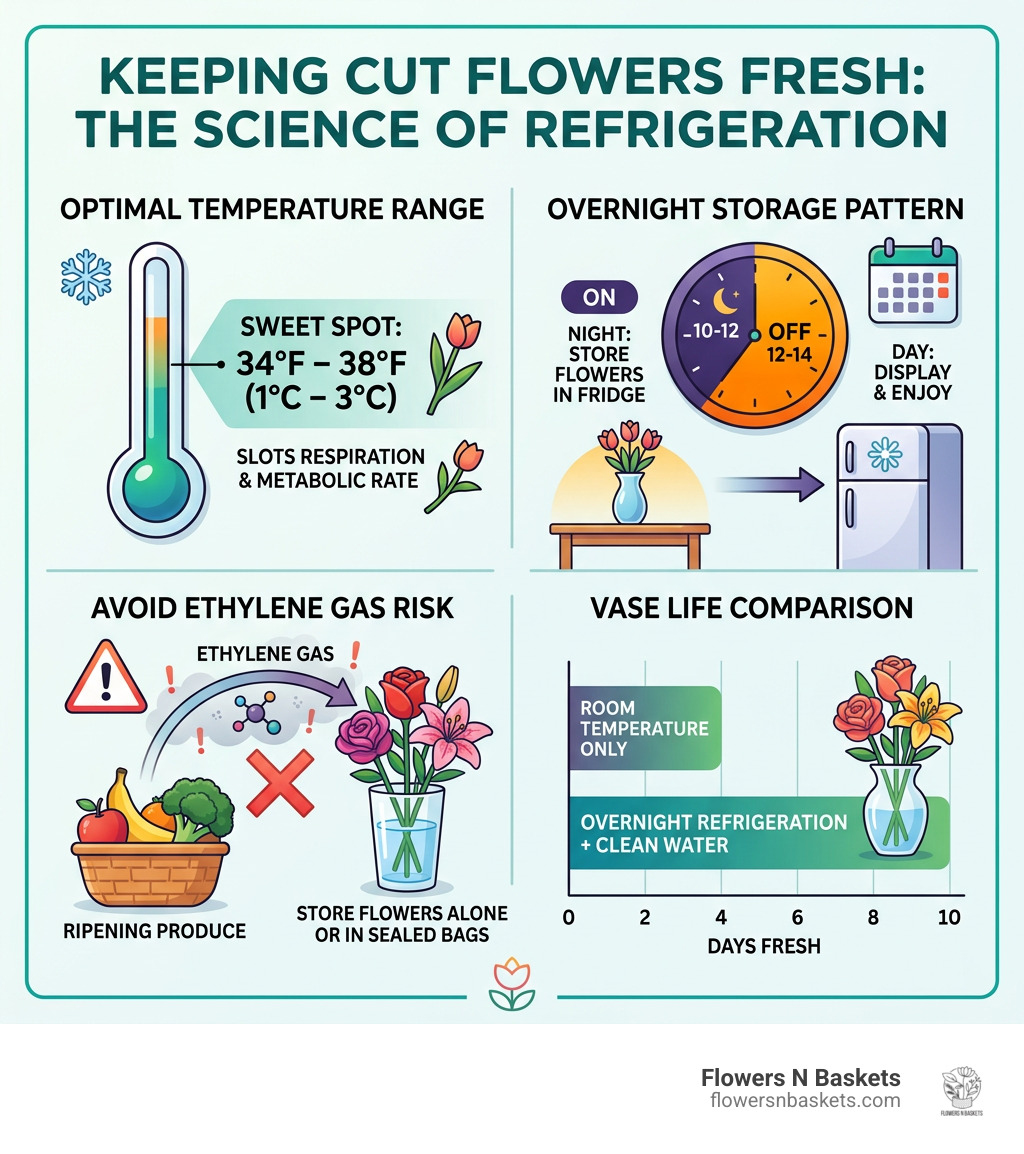
- Aim for 34°F–38°F (1°C–3°C). This is the sweet spot for most common cut flowers.
- Store overnight, not permanently. A pattern of about 8–10 hours in the fridge per night is ideal.
- Keep flowers away from fruit. Ripening produce releases ethylene gas, which speeds up flower aging.
- Not all flowers respond well. Tropical varieties like orchids and anthuriums can be damaged by cold.
A study by Pro Flowers found that bouquets refrigerated overnight stayed healthy all the way to day 10 — outperforming every other preservation method tested. That's up to four extra days compared to flowers left at room temperature.
But there's a catch. Home refrigerators are not the same as the professional coolers florists use. Commercial floral coolers run at a precise 33°F–40°F and are designed specifically for flowers. Your kitchen fridge is colder, drier, and full of ethylene-producing fruits and vegetables. Without the right precautions, it can do more harm than good.
That's exactly what this guide covers — how to use your home fridge correctly so your flowers last as long as possible.
The Science of Why Refrigeration Works
To understand why keeping cut flowers in the fridge is so effective, we have to look at what happens to a flower once it is harvested. In our shop in Palm Harbor, we treat every stem as a living organism that is still breathing. This process is called respiration.
When a flower is cut, it loses its primary source of water and nutrients but continues to "inhale" oxygen and "exhale" carbon dioxide. This metabolic rate determines how quickly the flower matures and eventually dies. High temperatures act like an accelerator for this process. By placing flowers in a cold environment, we essentially put them into a state of "suspended animation."
According to a study discussed in Why the 'best' way to make cut flowers last longer is an overnight stay in the fridge, low temperatures significantly reduce transpiration—the process where water evaporates from the petals and leaves. When a flower loses water faster than it can drink it, you get that dreaded "droop." Cold air keeps the petals crisp and the cellular structure firm.
Furthermore, cold temperatures inhibit the growth of bacteria in the vase water. Bacteria are the silent killers of floral arrangements; they clog the tiny "veins" (xylem) in the stem, preventing the flower from hydrating. By chilling the water and the air, we slow down the microbial party happening at the base of your vase.
The Ideal Environment for Keeping Cut Flowers in the Fridge
Creating the perfect "spa day" for your blooms in a home refrigerator requires more than just clearing a spot next to the milk. You need to manage temperature, humidity, and airflow to mimic the professional walk-in coolers we use here in the Tampa Bay area.
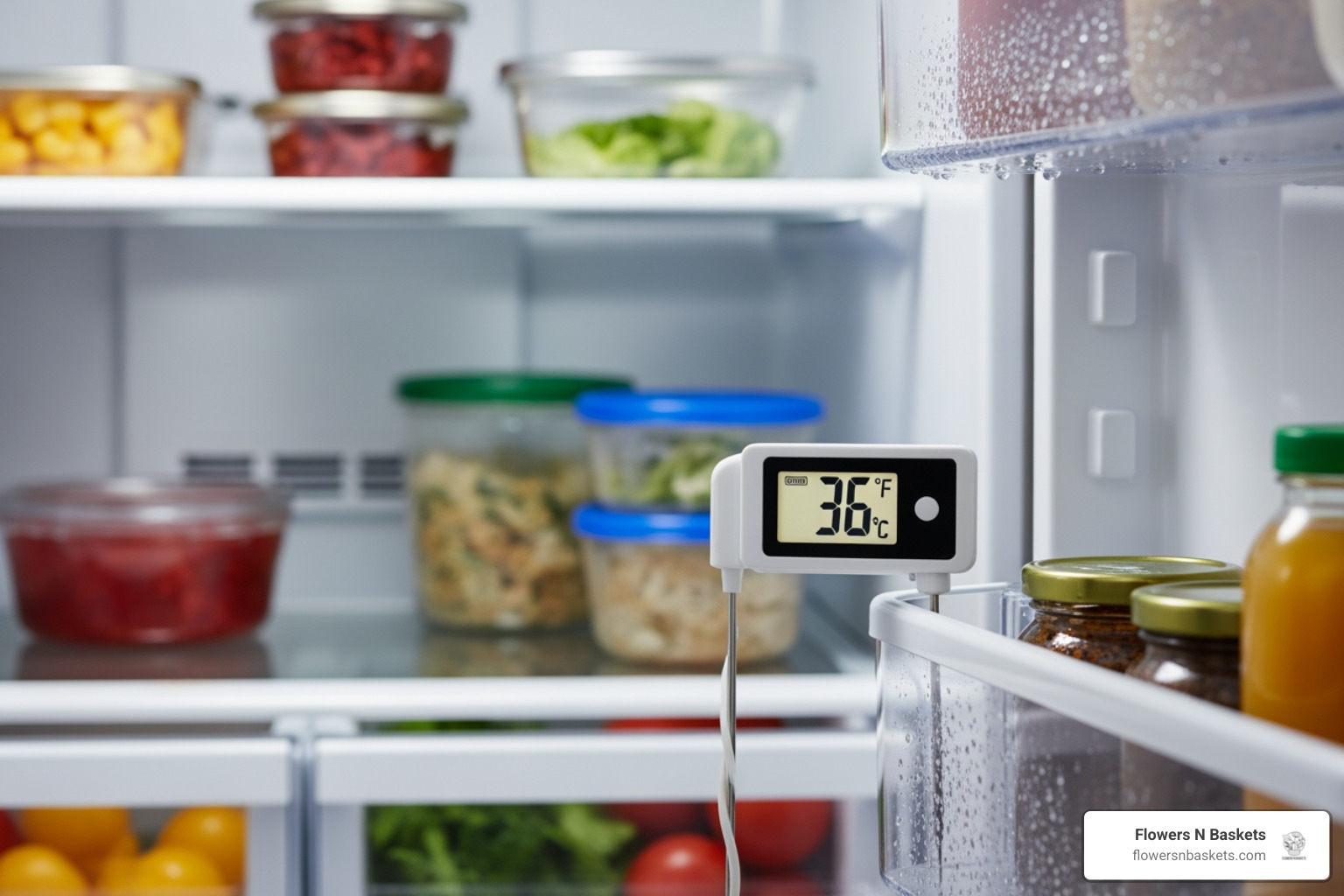
The gold standard for refrigeration is a range of 34°F to 38°F. If the temperature dips to 32°F or below, you risk freezing the delicate tissue of the petals, which will cause them to turn black or mushy once they thaw. If the temperature is above 40°F, the preservation benefits begin to drop off sharply.
Setting the Right Temperature for Keeping Cut Flowers in the Fridge
While professional florist coolers are kept between 33°F and 40°F, home refrigerators are often set slightly colder to keep meat and dairy safe. Before you put your prize roses inside, check your thermostat settings. If you have a dedicated "beverage fridge" or a wine cooler, these are often even better because they maintain a more consistent, slightly higher temperature that is less aggressive than a main kitchen unit.
Optimal Humidity and Airflow
Flowers love humidity—ideally around 50% or higher. Most home refrigerators are designed to remove moisture from the air to prevent frost, which can be tough on thin-petaled flowers. To combat this, ensure your flowers are well-hydrated before they go in. Good air circulation is also vital; don't crowd your flowers against the back wall of the fridge, as this is often where the coldest air enters and can cause localized freezing.
Step-by-Step Guide to Flower Preparation
You wouldn't go to bed without brushing your teeth, and you shouldn't put flowers in the fridge without proper "grooming." Proper preparation ensures that the hours spent in the cold are as productive as possible.
- Sterilize the Vase: Bacteria is the enemy. Wash your vase with hot, soapy water. Some experts even suggest a tiny drop of bleach to ensure it's medically clean.
- Strip the Foliage: Any leaves that sit below the waterline will rot, creating a bacterial soup. Remove all leaves from the bottom two-thirds of the stem.
- The 45-Degree Cut: Use a sharp knife or professional shears. Cutting at a 45-degree angle increases the surface area for water intake and prevents the stem from sitting flat against the bottom of the vase, which would block water flow.
- Cut Underwater if Possible: As noted in How to Keep Cut Flowers Fresh and Alive Longer, cutting stems underwater prevents air bubbles from entering the "veins" of the plant, which can cause a blockage.
Preparing Your Bouquet for Keeping Cut Flowers in the Fridge
Don't rush the process. After cutting the stems, let the flowers sit in lukewarm water (about 80°F to 110°F) for at least one hour at room temperature in a cool, dark corner. This allows them to take a "deep drink" and fully hydrate before the cold air slows their systems down. Warm water molecules move faster and are absorbed more easily by the plant than ice-cold water.
Choosing the Right Containers
When keeping cut flowers in the fridge, space is usually at a premium. Opt for heavy-based glass vases that won't tip over when you move the orange juice. If you are storing individual stems before arranging them, you can use airtight plastic containers or even clean Tupperware, provided the stems have enough water. Avoid metal containers, which can react with flower food and alter the pH of the water.
Avoiding Common Refrigeration Pitfalls
The biggest threat to your flowers isn't the cold—it's the other residents of your fridge. Specifically, your fruit bowl.
The Danger of Ethylene Gas
Most people don't realize that ripening fruits—especially apples, bananas, and tomatoes—release a colorless, odorless gas called ethylene. In the plant world, ethylene is a ripening hormone. For a cut flower, it acts like an aging serum. Exposure to even small amounts of ethylene gas will cause petals to drop, buds to fail to open, and leaves to yellow almost overnight.
If you are keeping cut flowers in the fridge, you must keep them away from the produce drawer. If your fridge is small, it's better to remove the fruit entirely while your flowers are "sleeping" inside.
Managing Daily Maintenance
Refrigeration is not a "set it and forget it" solution. To get that 10-day lifespan, you need to maintain the arrangement daily:
- Change the water: Every two days, completely replace the water and add fresh flower food.
- Re-trim: Every time you change the water, snip another half-inch off the stems to open up fresh water-conducting tissue.
- The Overnight Pattern: The most effective method is to display your flowers during the day and return them to the fridge for 8–10 hours every night. This "recharges" the blooms for the next day's display.
| Flower Type | Cold Tolerance | Fridge Friendly? |
|---|---|---|
| Roses | High | Yes (Best Method) |
| Carnations | High | Yes (Lasts 2-3 weeks) |
| Lilies | Medium | Yes |
| Orchids | Low | No (Chilling Injury) |
| Anthuriums | Low | No (Turns Black) |
Which Flowers Benefit Most from the Cold?
Not all flowers are created equal when it comes to the cold. Most "standard" florist flowers thrive in the fridge.
Roses are perhaps the biggest beneficiaries. As outlined in How to Make Roses Last Longer in a Vase: 7 Simple Tips, refrigeration is the single best way to prevent the "bent neck" syndrome common in roses. Carnations and Dianthus are also incredibly hardy; with proper refrigeration, these can sometimes last up to three weeks. Lilies, Chrysanthemums, and Peonies also respond very well to a nightly chill, which keeps their heavy blooms from wilting under their own weight.
Cold-Sensitive Varieties to Avoid
If you have a tropical arrangement, keep it far away from the fridge! Tropical flowers like Orchids, Ginger, Birds of Paradise, and Anthuriums are native to warm, humid climates. Temperatures below 50°F can cause "chilling injury," which manifests as translucent spots on petals or the entire flower turning black and limp. These flowers prefer a humid spot at room temperature, away from direct sunlight.
Myths vs. Facts in Flower Care
Over the years, we've heard every "old wives' tale" in the book at our Palm Harbor shop. Here is the truth about common additives:
- Copper Pennies: The idea is that copper acts as a fungicide. While true in theory, modern pennies have very little copper, and they don't dissolve in water. Skip it.
- Vodka: A few drops of vodka can slow down ethylene production and inhibit bacterial growth, but too much will simply dehydrate the flower.
- Soda: The sugar provides food, but it also feeds bacteria. If you use soda, you must add a tiny bit of bleach to kill the bacteria.
- Aspirin: This lowers the pH of the water, which helps water travel up the stem. It's effective, but professional flower food is better balanced.
Frequently Asked Questions about Flower Refrigeration
How long can flowers stay in the fridge?
If you are storing them continuously (for an event, for example), most flowers can stay in the fridge for 5–7 days. If you are using the "overnight" method, you can extend the life of a typical bouquet to 10 or even 12 days.
Is it safe to put store-bought flowers in a home refrigerator?
Yes, absolutely. In fact, most store-bought flowers have already been in a cooler for several days during transport. Continuing that "cold chain" at home is the best way to ensure they don't go into shock when they hit the warm air of your kitchen.
Should I refrigerate flowers every night or just once?
For the best results, refrigerate them every night. Consistency is key. Think of it like sleep for humans—one good night is great, but a regular sleep schedule keeps you looking and feeling your best long-term!
Conclusion
At Flowers N Baskets, we take pride in the longevity of our custom floral designs. Whether we are delivering to Clearwater, Dunedin, or right here in Palm Harbor, we want our premium arrangements to be a lasting source of joy in your home. By mastering the art of keeping cut flowers in the fridge, you are giving your blooms the professional-grade care they deserve.
Our in-house designers are always here to help you choose the hardiest stems for your next occasion. From architectural modern pieces to lush, romantic bouquets, we specialize in creations you won't find anywhere else in the Tampa Bay area.
Ready to brighten your space with a custom arrangement? Check out our local florist blog for more expert tips or contact us today for a consultation. Let us help you make your floral moments last a lifetime!