

Palm Harbor Florist Tips: Crafting the Perfect Native Wedding Bouquet
By Marina EgorovaChoosing a Native Wedding Bouquet in Palm Harbor
For a native wedding bouquet, start with flowers that grow naturally in your wedding region and bloom near your date. Ask your florist which locally grown stems will hold up well through the ceremony, then choose colors and textures that fit your style. If you love a classic look, native blooms can sit alongside garden roses.
In Palm Harbor, that means checking what is native to Florida rather than assuming every “wild” or tropical flower is local. Flowers N Baskets can help you shape that choice into a bouquet that feels personal and practical for your day.
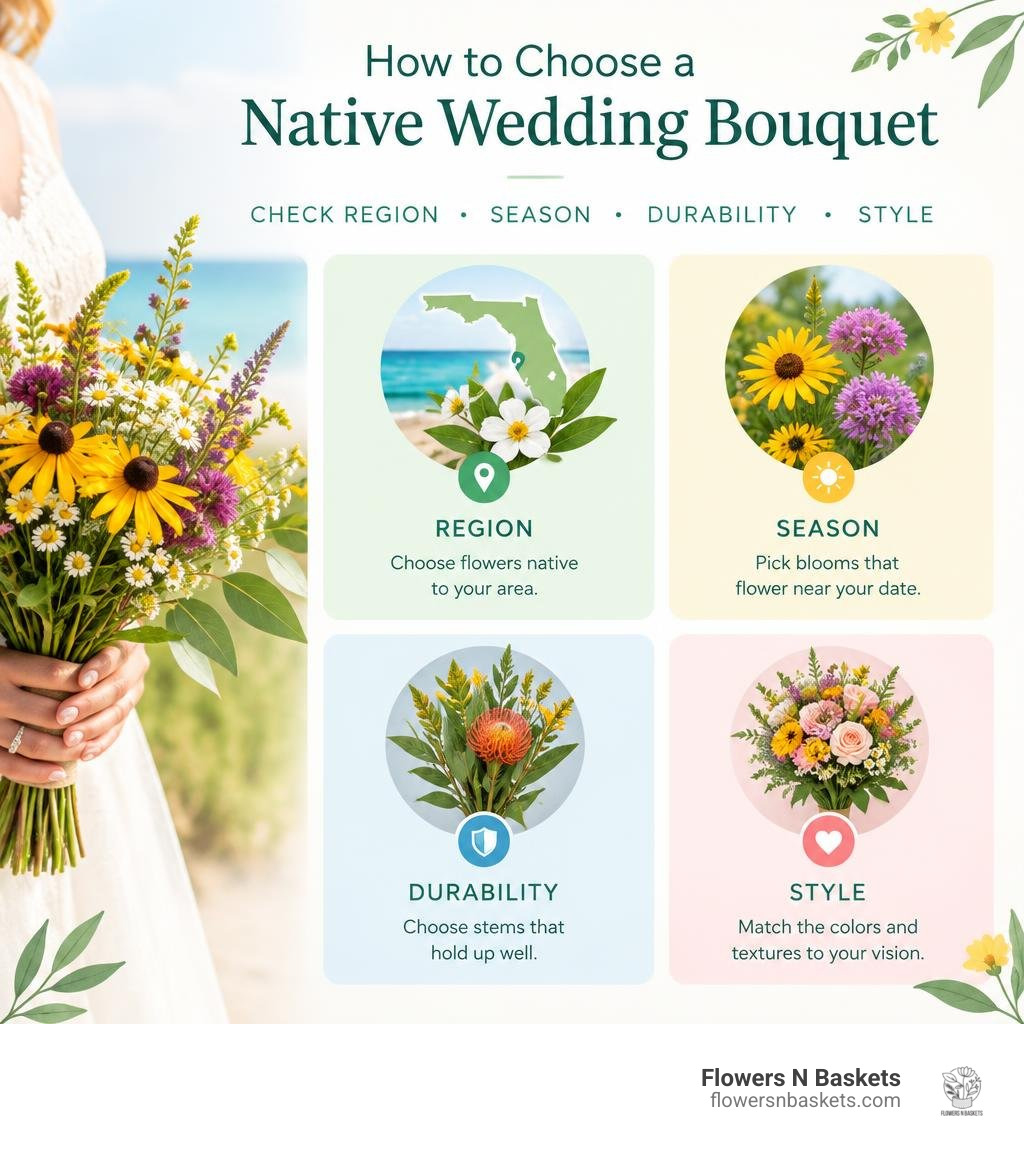
Why Choose a Native Wedding Bouquet for Your Big Day?
Couples planning celebrations across Palm Harbor, Dunedin, and Clearwater are rethinking how their floral choices impact the world around them. Traditional wedding florals often rely on complex global supply chains. Commercially grown blooms are frequently imported from South America and across the globe, generating a substantial carbon footprint through long-distance air transport and refrigerated cargo.
Choosing locally adapted and indigenous botanicals offers an environmentally responsible alternative. Native plants have spent centuries adapting to their native soils and climates. They naturally require significantly fewer chemical treatments, synthetic fertilizers, and pesticides, creating a cleaner ecosystem that protects bees, butterflies, and other vital pollinators.
Furthermore, native flora conserves precious water resources. Once established, these plants thrive on natural rainfall cycles and tolerate localized drought conditions far better than delicate, high-maintenance commercial imports. When exploring expert wedding flower advice, couples quickly discover that embracing native stems combines ecological stewardship with striking artistic expression.
| Floral Feature | Native Wedding Botanicals | Commercially Imported Blooms |
|---|---|---|
| Carbon Footprint | Minimal; sourced through regional growers and ethical local harvesters | Substantial; thousands of transit miles via air freight and cooled transport |
| Water Usage | Low; naturally adapted to regional rainfall and drought cycles | High; requires intensive commercial irrigation systems |
| Chemical Impact | Minimal to none; evolved natural pest resistance | Heavy reliance on synthetic pesticides and preservation sprays |
| Outdoor Durability | Exceptional; built-in botanical defense against intense sun and heat | Moderate to delicate; prone to rapid wilting and petal bruising |
| Post-Event Keepsake | High; dry cleanly while retaining structural integrity | Moderate; thin petals often shrivel or brown during drying |
Ecological Benefits and Climate Resilience
Florida sunshine and coastal breezes can present challenges for fragile cut flowers. Native botanicals hold a distinct biological advantage. Having evolved in climates defined by strong sun exposure, sandy soils, and coastal winds, these plants possess specialized botanical defenses. Their foliage and petals feature thick cuticles, dense woody fibers, and waxy protective coatings.
These adaptations ensure stems lose internal moisture at a significantly slower rate than thin-petaled imported blooms. While standard roses might begin to flag after a few hours under the afternoon sun, sturdy native botanicals can remain fresh and vibrant for up to eight hours in direct light. This resilience makes them an exceptional match for outdoor ceremonies throughout Tampa Bay, St. Pete, and Tarpon Springs.
Signature Blooms for a Native Wedding Bouquet
Designing unique wedding arrangements with native elements introduces deep visual depth, varied tactile forms, and rich botanical storytelling. Several signature blooms offer extraordinary beauty and lasting strength:
- Purple Coneflower (Echinacea purpurea): Renowned for its raised central cone and swept petals, this resilient bloom symbolizes healing, strength, and unwavering endurance.
- Black-Eyed Susan (Rudbeckia hirta): Featuring golden-orange petals radiating around a deep chocolate center, this classic wildflower represents encouragement, warmth, and joyous beginnings.
- Banksia: Highly prized for its sculptural, cylindrical flower spikes, this botanical adds bold architectural structure and symbolizes rebirth and perseverance.
- Waxflower (Chamelaucium): Dotted with delicate, waxy petals and evergreen-like foliage, waxflower signifies enduring romance, happiness, and rich fortune in marriage.
- Golden Wattle (Acacia): Bearing fluffy golden blossoms with a sweet, delicate fragrance, wattle represents secret love, resilience, and unity.
Designing with Native Blooms: Regional Styles and Cultural Significance
Floral choices have always served as a bridge between wedding rituals and cultural heritage. Integrating local flora into ceremony designs allows couples to honor their environment while celebrating meaningful traditions from around the globe.
North American Wildflowers and Heritage Traditions
Across North America, native wildflowers are deeply rooted in regional history and Indigenous ceremonial practices. For centuries, native botanicals such as Missouri primrose, wild coreopsis, and white sage have carried profound ceremonial meaning. In traditional tribal ceremonies, white sage is gathered for smudging—a sacred cleansing ritual that purifies the gathering, dispels negative energy, and carries blessings for the couple's shared future.
These floral traditions often complement time-honored rituals such as the wedding vase ceremony, where partners drink together from a two-handled vessel to symbolize harmony. Similarly, during blanket ceremonies, individual blue blankets representing past lives are set aside in favor of a shared white blanket representing peace and unified devotion. By selecting heritage prairie wildflowers and native botanical accents, couples infuse their bridal arrangements with narrative depth and cultural reverence.
Australian Botanicals and Tropical Island Traditions
Modern floral styling frequently looks to the sculptural elegance of bold, structural native arrangements and long-lasting dried floral concepts for inspiration. Stems like woody banksias, flowering gums, and striking proteas create dynamic bouquets with captivating asymmetry. While banksias and waratahs are endemic to Australia, proteas originate from South Africa’s Cape Floristic Region; both share the Proteaceae botanical family and offer structural drama.

Tropical traditions carry an equally rich heritage of botanical honor. In authentic island celebrations, the wedding lei tradition illustrates deep love and respect. The open-ended, fragrant maile vine garland represents courtship, peace, and sacred bonds, often paired with delicate white pīkake strands for the bride and vibrant ʻilima blossoms for the groom.
Cultural celebrations across the globe showcase how florals elevate sacred occasions—from Native American wedding customs to the vibrant colors and coral-adorned bridal touches described in Nigerian wedding traditions, where matching guest fabrics (aso-ebi) and rich palm motifs frame both traditional and white wedding ceremonies.
Modern Styling: Balancing Native Stems with Traditional Florals
You do not need to choose between a rustic wildflower aesthetic and classic bridal romance. One of the leading design movements combines rugged native textures with velvety, traditional focal blooms to achieve a refined, artistic balance.
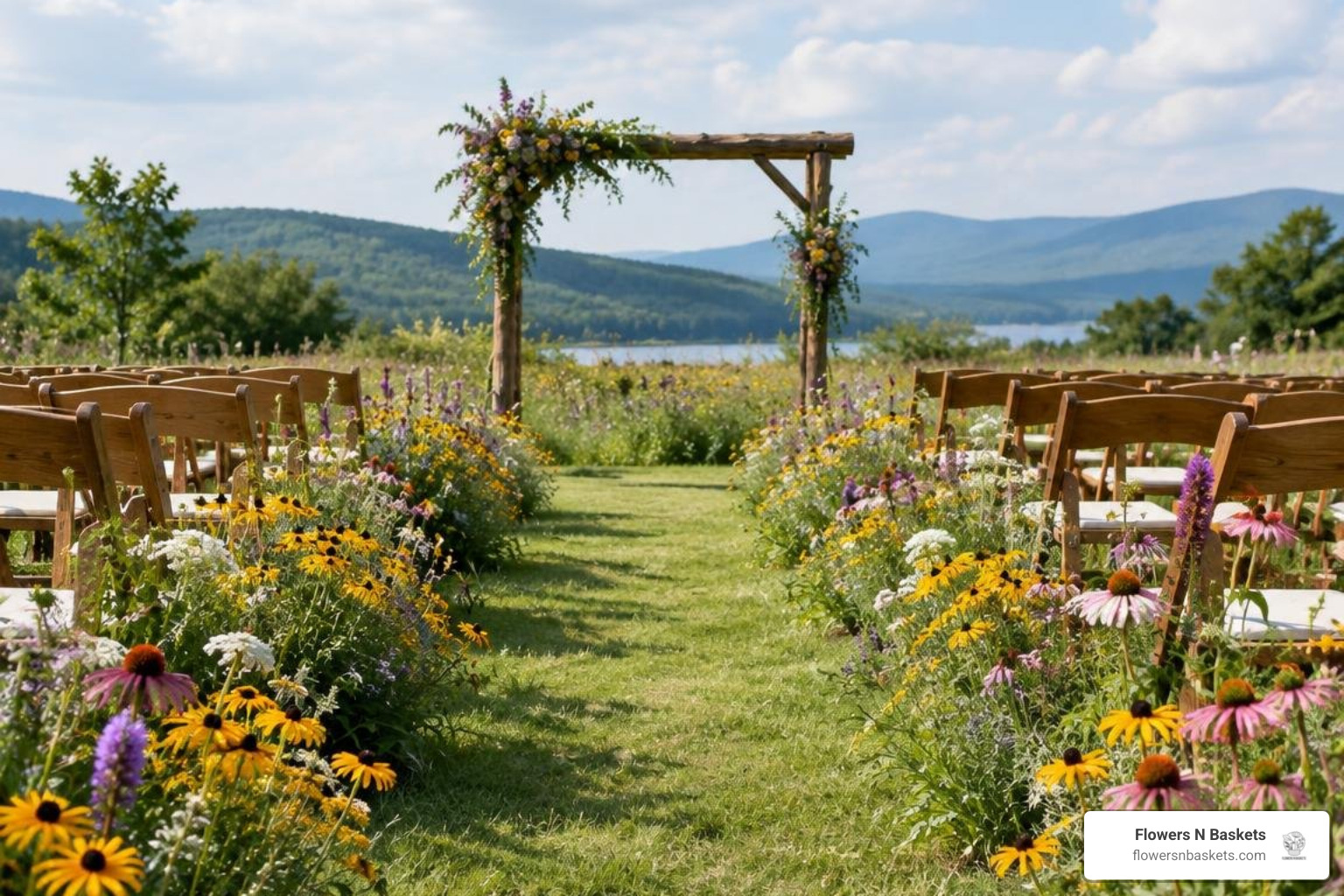
When developing modern palettes, design trends emphasize grounded, earthy tones. Palettes featuring warm terracotta, deep burgundy, dusty mauve, ochre, and warm slate provide an organic foundation. These colors evoke natural earth tones, creating an inviting, sophisticated atmosphere that works seamlessly from seaside clearings to lush botanical gardens. To frame your vow exchange beautifully, explore our wedding arch decor ideas guide for installations that integrate these earthy tones.
Pairing Wild Textures with Reflexed Roses
A modern method for marrying distinct floral textures is the reflexed rose technique. In this approach, florists gently fold back the outer petals of classic garden roses by hand, expanding the bloom's visual size and creating an open, pillowy profile.
When paired with the defined silhouettes of banksias, textured coneflowers, or fine waxflower sprigs, reflexed roses offer a soft, luxurious focal point. The contrast between rough seed pods, velvety petals, and waxy native greens creates intentional negative space. This dynamic tension elevates elegant wedding flower arrangements, transforming a standard bouquet into an editorial art piece.
Foam-Free Mechanics and Grounded Meadows
True floral sustainability extends beyond plant choices to encompass design mechanics. Traditional floral foam contains non-biodegradable synthetic plastics that break down into harmful microplastics. Native stems, with their rigid, woody branches, perform exceptionally well in foam-free mechanics.
Using reusable metal kenzan flower frogs, chicken wire grids, and concealed water wells, florists can craft expansive floral displays that keep stems well-hydrated. A prominent floral trend features "grounded meadows." These curved, freestanding floral arrangements sit directly on the floor to frame the couple during the ceremony. Because they are designed in self-contained water vessels, these meadows can be seamlessly relocated from the ceremony aisle to the base of the bridal table for the evening reception, maximizing their visual impact throughout the venue.
Care, Sourcing, and Post-Wedding Keepsakes
Proper sourcing and expert hydration care guarantee your native florals remain picture-perfect from morning preparations through the final dance of the night.
Sourcing and Preserving Your Native Wedding Bouquet
When curating native botanicals, responsible sourcing is essential. Harvesters should never remove wild plants from public parks, preserves, or protected coastal ecosystems. Always partner with licensed specialty nurseries, certified flower farms, or a knowledgeable local florist who practices sustainable, ethical cultivation. If gathering blooms from private property with permission, take only what is needed, leaving the root systems and surrounding populations healthy and undisturbed.
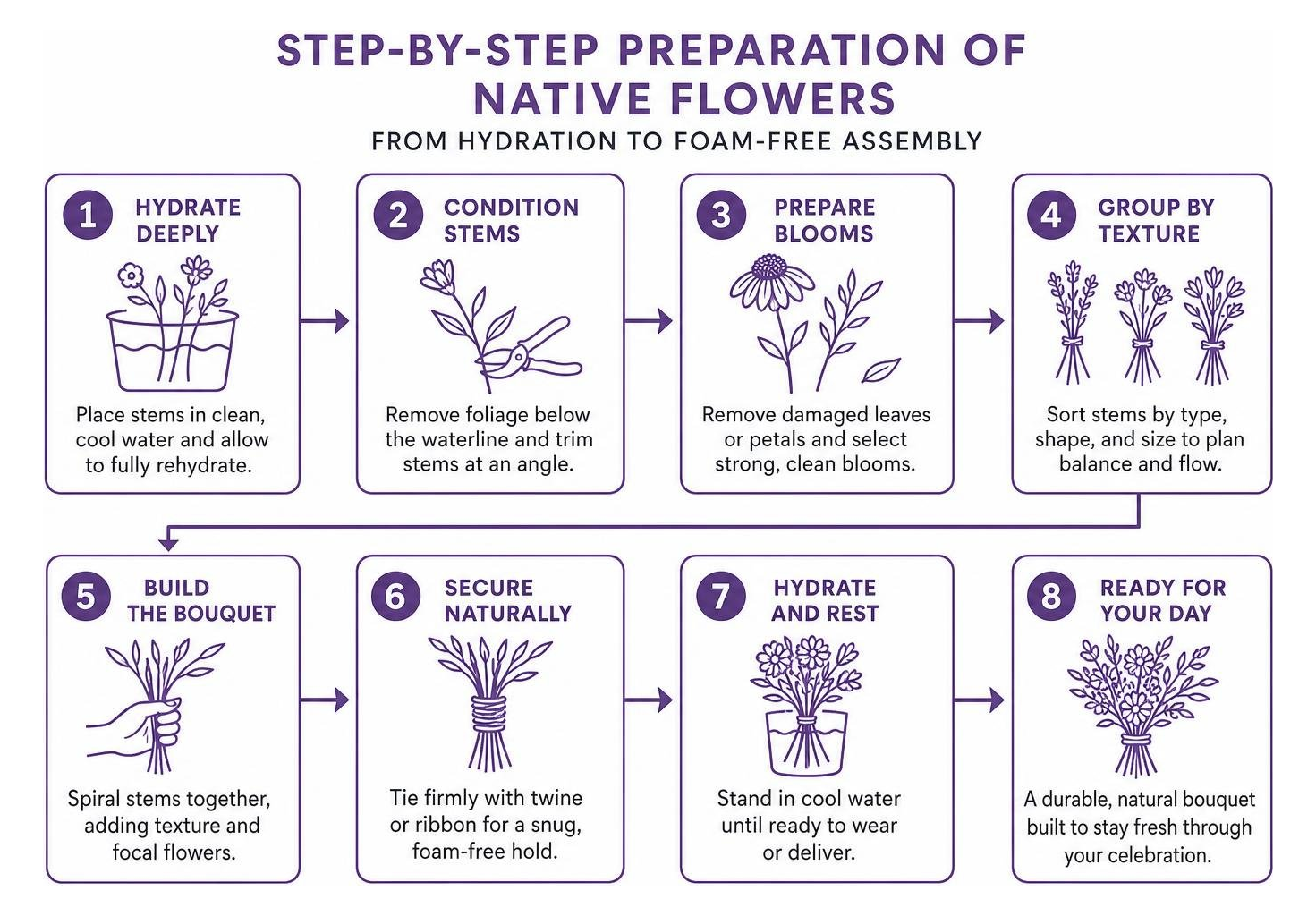
To maximize vase life, cut stems in the cool hours of early morning or late evening when moisture levels within the plant are highest. Always make clean cuts at a 45-degree angle using sterilized floral shears, which increases surface area for water absorption and prevents stems from resting flat against the container bottom. Remove any foliage that would sit below the waterline, mist delicate petals lightly, and store arrangements in a cool, shaded environment away from direct sun and drafts. For couples hosting coastal events, consulting our beach wedding flowers Clearwater guide provides helpful tips on shielding cut stems from sea breezes.
Many native varieties transition effortlessly into lasting home decor. Stems such as banksia, protea, sea oats, and seeded eucalyptus dry cleanly without losing their form. As documented with artisan keepsakes at Dried and Preserved Blooms, Launceston (2026), air-drying bouquets upside down in a warm, dark, well-ventilated space for two to three weeks preserves both color and structure, providing a beautiful memento of your wedding day.
Extending Native Botanicals Across Wedding Decor
Native elements can be woven throughout every touchpoint of your wedding celebration:
- Ceremony Arches & Backdrops: Use sturdy native eucalyptus branches, longleaf pine boughs, and flowering vines to build grounded, sculptural archways.
- Wearable Florals: For small personal arrangements, explore groomsmen boutonniere ideas that feature resilient accents like waxflower, small coneflower centers, or dried billy buttons that easily withstand hugs and warm temperatures.
- Tablescapes and Receptions: Elevate your wedding reception decor with low-profile wooden troughs or ceramic bud vases filled with seasonal wildflowers, delicate native grasses, and floating palmetto fronds.
- Stationery & Keepsakes: Press delicate native petals between glass frames, or embed flower petals into handmade wedding invitations.
- Living Favors: Offer guests personalized seed packets filled with regional wildflower seeds or small potted native succulents to plant at home in honor of your celebration.
Frequently Asked Questions About Native Wedding Flowers
How do native flowers hold up in Florida’s coastal heat and humidity?
Native botanicals are exceptionally well-suited for Florida's warm climate. Because they naturally evolved to withstand intense sun, humidity, and coastal breezes, varieties like coneflowers, blanket flowers, and woody stems have thicker exterior cuticles and moisture-retentive cellular structures. They resist wilting far longer than standard imported blooms, especially when kept properly hydrated in foam-free water vessels prior to the ceremony.
Are native wedding florals more affordable than imported blooms?
Choosing native and regionally sourced flowers can yield significant cost efficiencies. By sourcing locally, you reduce expenses associated with long-distance air freight, customs handling, and international refrigeration. Furthermore, because native stems are naturally hardy, fewer replacement stems are lost to transit damage, allowing your floral investment to focus on artistic craftsmanship and generous stem counts.
Can native wedding bouquets be dried and kept as keepsakes?
Yes. Many native flowers and foliages—such as banksias, proteas, strawflowers, eucalyptus, and ornamental seed pods—are natural evergreens that dry cleanly. By hanging your bouquet upside down in a dark, dry room with good air circulation for a few weeks, the botanical structures retain their architectural shape and rich color, allowing you to display your bouquet at home for years.
Conclusion
A thoughtfully designed bridal bouquet celebrates the natural landscape while telling your unique love story. By incorporating resilient, eco-friendly native blooms alongside classic floral favorites, your wedding flowers will capture the warmth and character of our coastal environment.
At Flowers N Baskets, our in-house floral artisans specialize in designing custom bridal collections for celebrations across Palm Harbor, Dunedin, Tarpon Springs, and throughout the greater Tampa Bay area. Whether you are envisioning a wild, sculptural design or an elegant hybrid arrangement, we are here to bring your vision to life. Schedule your custom wedding flower consultation with our team, or explore our complete dream wedding floral planning guide to start curating your wedding day florals.