

The Cultural History Behind Why Lilies Symbolize Death and Rebirth
By Marina EgorovaWhy Lilies Are Flowers of Death and Rebirth
Lilies are seen as flowers of death because they offer a way to express grief and hope at the same time. In Western funerals, white lilies often stand for purity and the hope of new life after death. In Japan, red spider lilies are linked to graves, farewell, and the journey to the afterlife.
These flowers are not all close botanical relatives. Their meanings grew from different beliefs and customs. That is why a lily can feel fitting at both a memorial and a wedding: its message depends on the flower and the occasion.
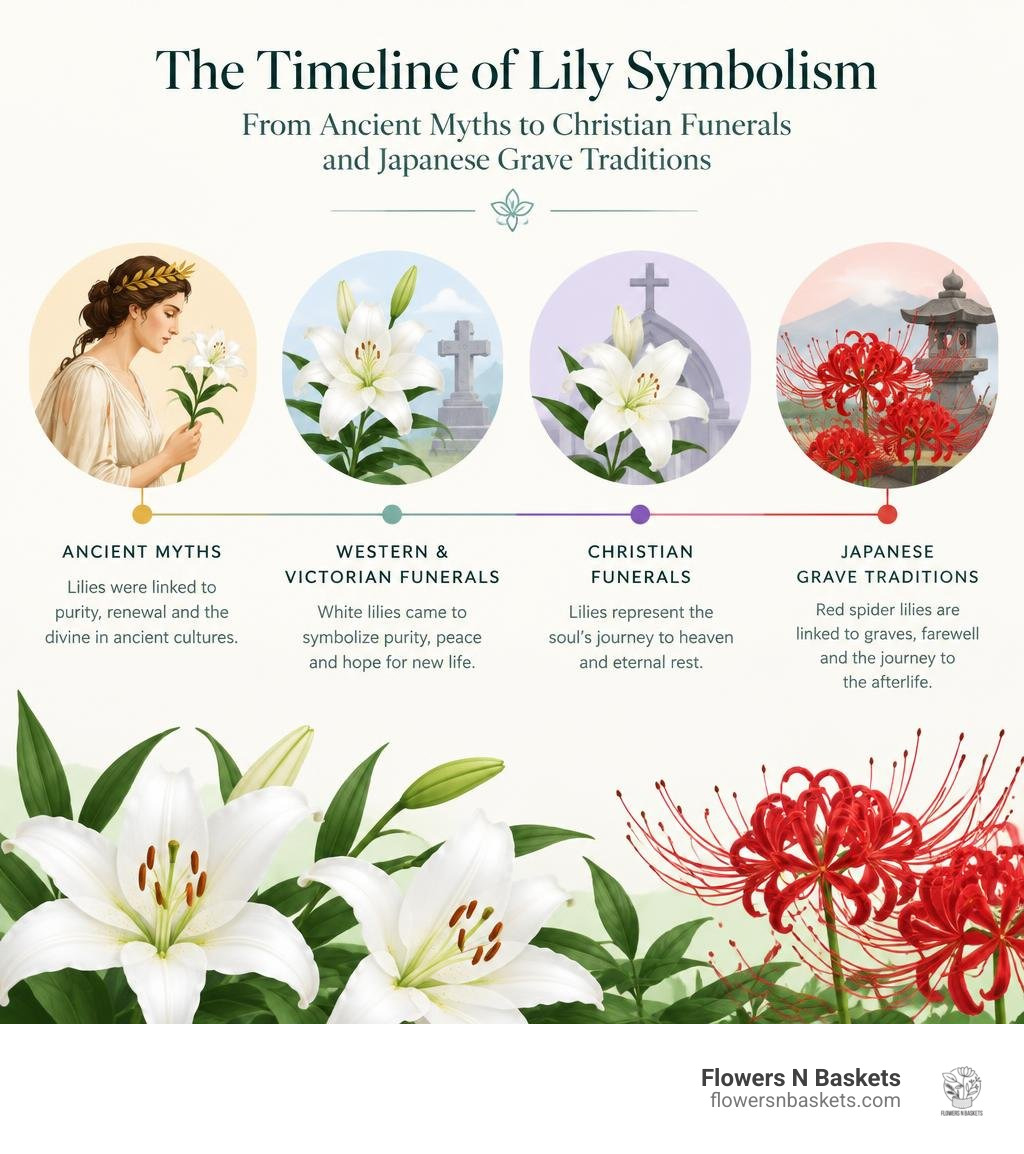
The Cultural Origins of Lilies as Flowers of Death
To understand why lilies carry such weight in mourning traditions worldwide, we have to look back at ancient burial practices. Long before modern mortuary care existed, families relied on fragrant botanicals during visitations and burials. True lilies produce an intense, sweet fragrance that naturally masked the harsh reality of physical decomposition. Over centuries, what began as a practical necessity transformed into a profound spiritual metaphor: the rich perfume symbolized the soul departing the physical body and ascending toward the heavens.
In historical floriography and funerary art, exploring Symbolism, Lilies reveals that these blooms were chosen to mark the soul’s passage into peace. Whether decorating Victorian burial monuments or serving as a flower that represents death in ancient rituals, lilies bridge the fragile line between earthly grief and celestial rest.
Greek and Roman Mythology: From Hera's Milk to the Underworld
The mythological heritage of the lily dates back millennia. Minoan frescoes discovered in a villa on Crete dating to 1580 B.C. illustrate that lilies were cherished in religious rituals during the Bronze Age.
In classical Greek mythology, the white lily (Lilium candidum) originated from divine milk. Legend says that while the infant Hercules nursed from the sleeping goddess Hera, drops of her milk spilled across the heavens, creating the Milky Way. The drops that fell to Earth blossomed into pure white lilies. The Romans embraced this myth through Juno, associating the bloom with queenly majesty and celestial purity. In Roman funerary custom, white lilies were woven into wreaths placed over the deceased, serving as a beacon of soul immortality and guiding the departed into the peaceful realm of the Underworld.
White Lilies as Flowers of Death and Restored Innocence
In Christian iconography, the white Madonna lily became an enduring symbol of spiritual renewal. Early church traditions linked the flower to the Virgin Mary, representing chastity, grace, and divine light.
When incorporated into memorial tributes, white lilies communicate that the departed soul has returned to a state of restored innocence and peace. The trumpet shape of the bloom mirrors the archangel's trumpet, heralding resurrection and life everlasting. Today, families seeking classic, comforting tributes frequently turn to our white funeral flowers collection or choose an elegant white lily bouquet in a glass vase to honor a loved one's memory.
European Grave Folklore and Spontaneous Blooms
European folklore deepened the connection between lilies and the physical site of burial. Across medieval Germany and throughout the collected tales of the Brothers Grimm, legends told of "grave lilies" (Grabeslilien) that sprouted unprompted over the resting places of the innocent or those wrongfully condemned.
Historical records, such as the Swiss Hildisreiden legend of 1430, recount white blossoms miraculously rising above the graves of martyrs. In 1558, a Spanish monk at the monastery of San Juste reportedly witnessed a pristine lily bloom directly from an unmarked grave at the exact hour of a brother's passing. These accounts, explored in folklore about flowers growing on corpses, reinforced the conviction that a pure spirit manifests as a blossoming lily to confirm divine redemption.
The Red Spider Lily: Asia’s Legendary Corpse Flower
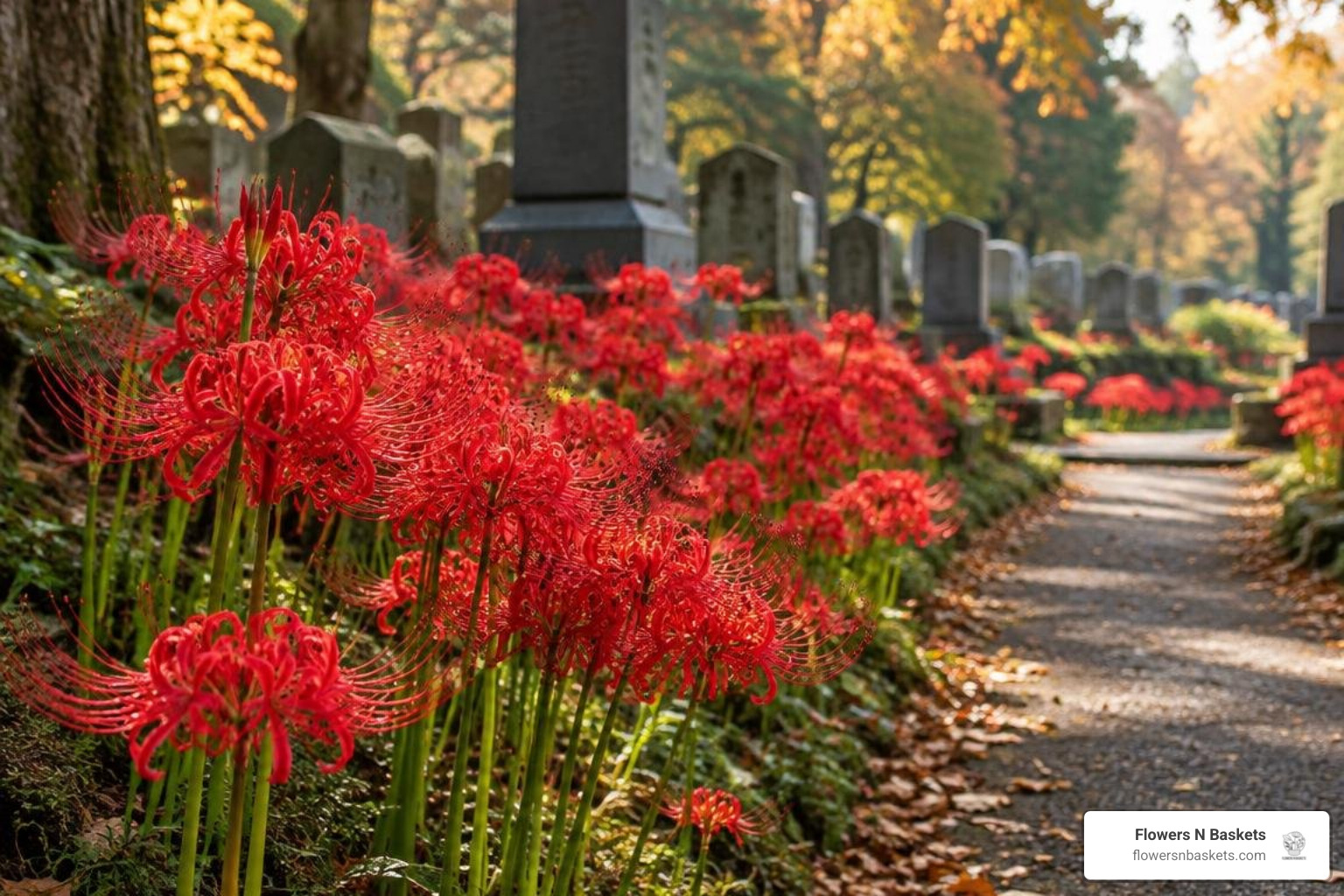
While the West associates white lilies with purity, East Asia views the red spider lily (Lycoris radiata) as the ultimate symbol of final farewells. Belonging to the Amaryllidaceae family rather than the true lily genus Lilium, this striking plant produces bright crimson petals with delicate, elongated stamens that resemble spider legs.
The botanical profile of Lycoris radiata shows a fascinating growth habit: it blooms in late summer and early autumn around the equinox, with the flowers emerging on leafless stalks before any foliage appears. The bulbs contain toxic alkaloids, primarily lycorine. Historically, Japanese villagers planted these bulbs around rice paddies and earthen grave mounds because the toxic roots acted as a natural rodent and scavenger deterrent, preventing wild animals from disturbing resting places. Over time, their physical presence in cemeteries cemented their reputation as the "corpse flower" or "hell flower."
Red Spider Lilies: The East Asian Flower of Death
In Japanese Buddhist culture, the red spider lily is known as Higanbana (彼岸花), meaning "the flower of the other shore." Autumn equinox ceremonies (Higan) mark the transition of seasons and the honoring of ancestral spirits. Buddhist tradition teaches that Higanbana lines the banks of the mythical Sanzu River, guiding souls across the waters to the afterlife.
Chinese and Korean lore share a poignant legend about the flower's distinct growth habit. Two spirits, Mañju (who guarded the blossom) and Saka (who guarded the leaves), were forbidden from meeting. When they defied the gods to embrace, a curse fell upon them: the flowers and leaves would never appear at the same time. When the red petals emerge, the leaves wither; when the leaves sprout, the blossom is gone. Consequently, Lycoris radiata embodies eternal separation, lost love, and final farewells.
Modern Pop Culture: Red Spider Lilies in Anime and Media
In modern entertainment, the visual power of the red spider lily continues to captivate global audiences. Popular anime series such as Tokyo Ghoul, Demon Slayer, Hell Girl, and Inuyasha use the bloom to signal tragic transitions, mortality, and irreversible fate.
In Tokyo Ghoul, Ken Kaneki’s psychological torture is accompanied by a surreal field of white carnations that slowly turn into blood-red spider lilies, symbolizing the death of his human innocence and his rebirth as a ghoul. As detailed in analyses on the meaning of red spider lilies in anime, the flower serves as a visual metaphor for shedding one's past self and crossing the threshold into darkness.
Comparing Lily Varieties and Other Funerary Blooms
Flowers speak an unspoken emotional language during times of grief. To choose the right arrangement, it helps to understand how different blooms communicate sympathy. Our sympathy flowers complete guide explores how floral choices capture personal sentiments.
| Flower | Primary Cultural Meaning | Common Funerary Role | Emotional Tone |
|---|---|---|---|
| White Lily (Lilium) | Restored innocence, resurrection, purity | Casket sprays, formal wreaths | Solemn, reverent, peaceful |
| Red Spider Lily (Lycoris) | Final farewell, transition to afterlife | Cemetery plantings, ancestral altars | Melancholic, dramatic, mystical |
| Red Poppy (Papaver) | Remembrance, eternal sleep | War memorials, military tributes | Honor, remembrance, quiet rest |
| Marigold (Tagetes) | Guiding ancestral spirits | Día de los Muertos altars | Vibrant, celebratory, spiritual |
| Black/Dark Rose (Rosa) | Mourning, devotion, end of an era | Personal tributes, gothic memorials | Deep sorrow, enduring affection |
Symbolism of Popular Memorial Lily Varieties
Different lily varieties offer distinct emotional notes when honoring a life:
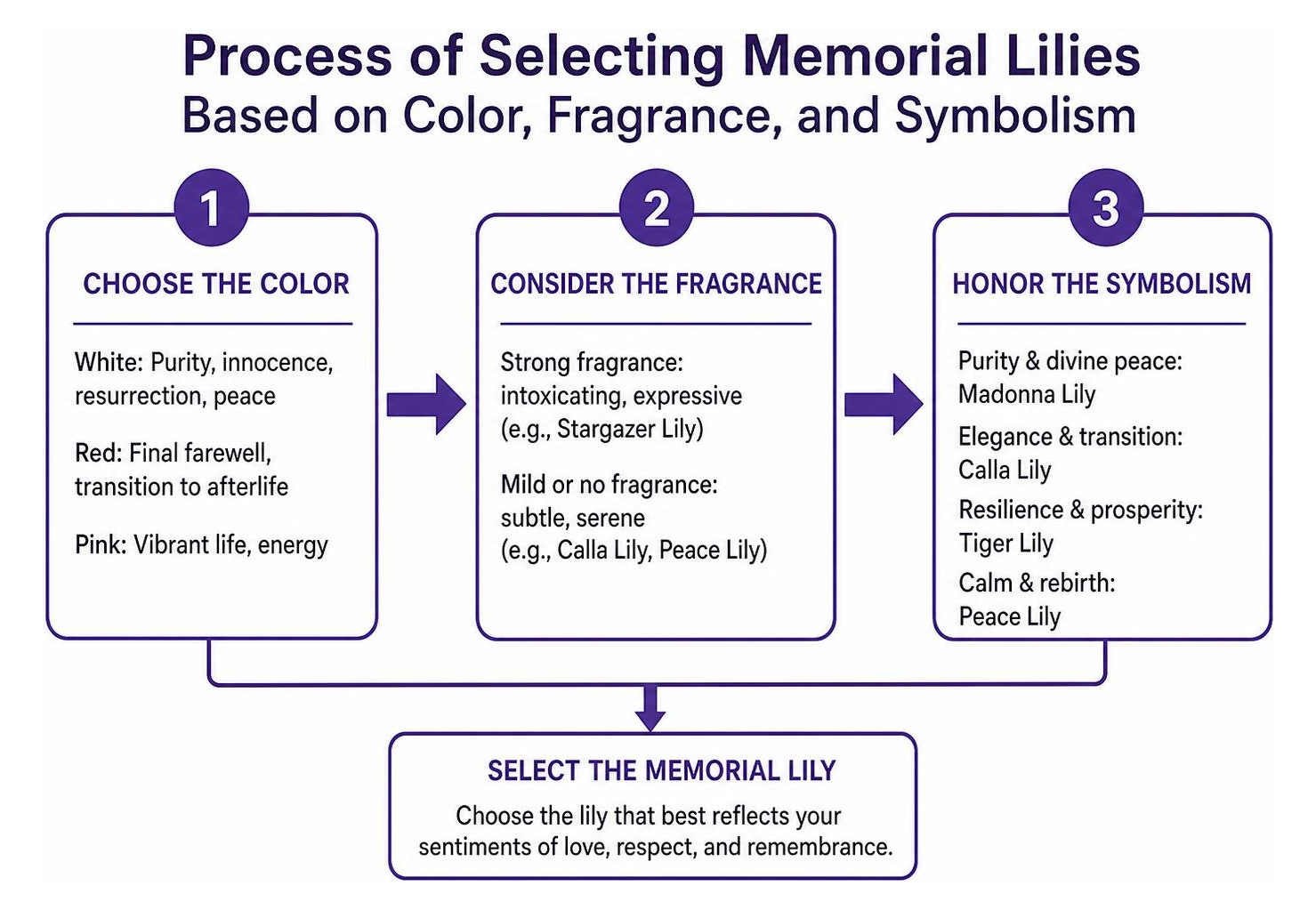
- Madonna Lily (Lilium candidum): The quintessential historic funeral flower, representing pure virtue and divine peace.
- Calla Lily (Zantedeschia): With its sleek, sculptural silhouette, the calla lily symbolizes elegance, transition, and resurrection.
- Stargazer Lily (Lilium 'Star Gazer'): Featuring dramatic pink and white hues with an intoxicating perfume, Stargazers celebrate an energetic, vibrant life.
- Tiger Lily (Lilium lancifolium): Symbolizing pride and prosperity, often chosen to celebrate resilience.
- Peace Lily (Spathiphyllum): A long-lasting indoor plant representing calm, tranquility, and rebirth. Many families prefer sending living peace lily plants for sympathy as an enduring keepsake for the home.
The Duality of Life and Death: Funerals vs. Weddings
Few botanical specimens carry the dual fluency of the lily. It is simultaneously a traditional funeral tribute and the official 30th wedding anniversary flower. In bridal bouquets, white lilies signify fidelity, fertility, and new beginnings; in funeral caskets, those same blooms denote the soul’s peaceful departure and restored grace.
As highlighted in the scholarly perspective on lily paradoxes, the lily reflects the cyclical nature of human existence. By representing both the creation of life and its peaceful conclusion, lilies remind us that every ending is an inherent part of life's broader continuum.
Practical Considerations: Toxicity, Etiquette, and Placement

When selecting and presenting lilies during periods of mourning, there are practical considerations regarding safety, presentation, and etiquette.
Severe Toxicity Warning for Cats and Household Pets
If you are sending condolence flowers to a home with pets, you must exercise extreme caution. All true lilies belonging to the genus Lilium (including Asiatic, Oriental, Easter, and Stargazer lilies) as well as Hemerocallis (daylilies) are severely toxic to domestic felines.
Even microscopic exposure—such as a cat grooming fallen pollen from its fur, nibbling a single leaf, or drinking water from the vase—can trigger acute, fatal renal failure within 24 to 72 hours. Veterinary intervention is most effective when administered within an 18-hour window of ingestion. When sending sympathy arrangements to cat-owning households, consider requesting pet-safe alternatives such as orchids, roses, or snapdragons.
Planting and Presenting Memorial Lilies
To ensure sympathy arrangements are delivered and maintained with care, keep these guidelines in mind:
- Select the appropriate setting: Large standing sprays, crosses, and casket covers are typically reserved for the funeral home or church service, while smaller vase arrangements and potted plants are ideal for the family's residence.
- Check cemetery regulations: If planting memorial bulbs at a gravesite, check with the groundskeeper first. Many memorial parks restrict perennial bulb planting to maintain uniform turf.
- Plant bulbs in autumn: For home memorial gardens, plant hardy lily bulbs in well-draining soil during the autumn months so they establish roots before spring.
- Remove pollen anthers: In cut arrangements, gently snip the powdery orange anthers from the center of opening lilies. This prevents staining on clothing and casket drapery while extending the vase life of the petals.
Frequently Asked Questions About Lilies and Death
Why are white lilies traditionally chosen for Christian funerals?
White lilies represent the restoration of the soul's innocence following death. In Christian theology, the trumpet-like petals reflect the Annunciation and the promise of resurrection, bringing comfort to grieving families by symbolizing eternal peace.
Is it considered bad luck to give red spider lilies as a gift?
Yes. In Japan, China, and Korea, red spider lilies are strongly tied to graveyards, bad omens, and irreversible farewells. Gifting these blooms in celebratory or casual settings is considered culturally insensitive.
What should I do if my cat ingests any part of a true lily?
Treat any exposure as a medical emergency. Immediately contact your local emergency veterinarian. Bring a photo or sample of the flower to confirm the species. Fast decontamination and intravenous fluid therapy within the first 18 hours are critical to preventing irreversible kidney damage.
Conclusion
From ancient Minoan frescoes to serene memorial services across the Tampa Bay area, lilies hold an enduring place in how we honor life, mourn loss, and express hope. Whether you are comforting a grieving friend or planning a graveside tribute, choosing the right floral arrangement helps convey love when words fall short.
At Flowers N Baskets, we create meaningful floral tributes with care. Our in-house designers handcraft elegant funeral sympathy flower arrangements tailored to your family's wishes, providing dependable same-day delivery throughout Palm Harbor, Clearwater, Dunedin, Tarpon Springs, and nearby communities. Contact our local florist today to order a custom memorial arrangement.